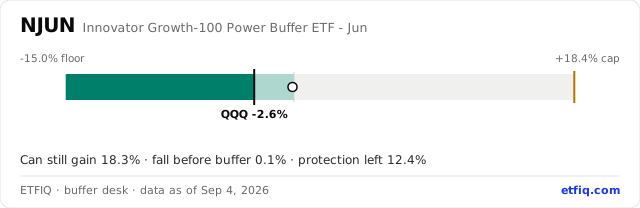
NJUN absorbs 59% of the next 20% fall in what it tracks. It has 22.3 points of upside left, 121% of the cap it started with.
If the market falls into a bear market from here, how much does the buffer absorb?
Share of a 20% fall the buffer absorbs
That is the share of the 293 buffer ETFs with a live outcome period sitting at or below NJUN. A position in this set, not a rating: it moves when the set moves, and it is not a figure to average against another desk's.
Protection left, in index points: 11.8% of the 15.0% buffer still sits below today's QQQ level. 262 days remained on Sep 11, 2026. On May 31, 2027 the period ends and a new cap is set.
NJUN (Innovator Growth-100 Power Buffer ETF - Jun), buffer ETFs fields as of Sep 11, 2026. Source: ETFIQ.
Reference index
QQQ
Buffer
15%
Outcome period
May 31, 2026 to May 31, 2027
Starting cap
+18.4%
QQQ return since period start
−3.2%
Fund return since period start
−0.5%
Net assets (issuer page, as of Sep 11, 2026)
$174m
Band state today (ETFIQ)
Buffer working
Can still gain (issuer, fund price)
18.7%
Fall before buffer (issuer, fund price)
0.0%
Fall to the buffer in index terms (ETFIQ)
0.0%
Protection left in index points (ETFIQ)
11.8% of 15.0%
Days left in period
262
Expense ratio (issuer page, Sep 11, 2026)
0.79%
Issuer-published figures as of the date shown; ETFIQ calculations marked. Definitions on the learn page. How these figures are computed
Questions people ask
How much can NJUN still gain?
About 18.7% from its price on Sep 11, 2026, before it reaches its cap, by the issuer's published figure. The cap for the period was set at +18.4%.
How far can NJUN fall before the buffer helps?
0.0% in fund-price terms on Sep 11, 2026, by the issuer's figure. In index terms QQQ can fall 0.0% from that level before the buffer begins. Losses until that point are the holder's.
How much of the NJUN buffer is left?
11.8% of the 15.0% buffer sat below the QQQ level on Sep 11, 2026. That is an ETFIQ calculation in index points, on one definition for every issuer.
When does NJUN reset?
The outcome period ends on May 31, 2027, 262 days from the data on Sep 11, 2026. A new cap is set the next day and the buffer starts again.
What does NJUN cost?
The prospectus expense ratio is 0.79% a year.
The words on this page
Buffer
The first slice of loss the fund absorbs for you over its outcome period, stated on the reference index. A 15% buffer means the index can fall 15% before you take any of it.
NJUN, Buffer ETFs, ETFIQ, data as of Sep 11, 2026. Every figure is arithmetic on a named public source; the method is at etfiq.com/methodology. ETFIQ is an independent publisher, is not a fund issuer, broker-dealer or investment adviser, and makes no recommendations.
Cite this page. ETFIQ, NJUN, buffer ETFs, data as of Sep 11, 2026. https://etfiq.com/funds/njun Free to use with attribution; the underlying files are at Open data.